If you publish content to Facebook, Twitter, an email newsletter, and a print newsletter you should only be writing your content once in one place: your blog. The beauty of a blog that generates an RSS feed is that your content becomes portable. No need to copy and paste. No need to wrack your brain for articles to write for your next newsletter. Just click publish, and have it happen automatically.
If you’re interested in this type of setup, you can hire me to make it so.
Had to share this brilliant (and true) comic from the Oatmeal.

Via Signal vs. Noise: a quote from a Paul Rand essay. The discussion here is on how a client/manager’s expectations for multiple options ultimately leads to bad design. What do you think?
One of the more common problems which tends to create doubt and confusion is caused by the inexperienced and anxious executive who innocently expects, or even demands, to see not one but many solutions to a problem. These may include a number of visual and/or verbal concepts, an assortment of layouts, a variety of pictures and color schemes, as well as a choice of type styles. He needs the reassurance of numbers and the opportunity to exercise his personal preferences. He is also most likely to be the one to insist on endless revisions with unrealistic deadlines, adding to an already wasteful and time-consuming ritual. Theoretically, a great number of ideas assures a great number of choices, but such choices are essentially quantitative. This practice is as bewildering as it is wasteful. It discourages spontaneity, encourages indifference, and more often than not produces results which are neither distinguished, interesting, nor effective. In short, good ideas rarely come in bunches.
The designer who voluntarily presents his client with a batch of layouts does so not out prolificacy, but out of uncertainty or fear. He thus encourages the client to assume the role of referee. In the event of genuine need, however, the skillful designer is able to produce a reasonable number of good ideas. But quantity by demand is quite different than quantity by choice. Design is a time-consuming occupation. Whatever his working habits, the designer fills many a wastebasket in order to produce one good idea. Advertising agencies can be especially guilty in this numbers game. Bent on impressing the client with their ardor, they present a welter of layouts, many of which are superficial interpretations of potentially good ideas, or slick renderings of trite ones…
Expertise in business administration, journalism, accounting, or selling, though necessary in its place, is not expertise in problems dealing with visual appearance. The salesman who can sell you the most sophisticated computer typesetting equipment is rarely one who appreciates fine typography or elegant proportions. Actually, the plethora of bad design that we see all around us can probably be attributed as much to good salesmanship as to bad taste.
This naked Coke can (the invention of Ryan Harc) is one of the most beautiful things I have seen. Whats more, by removing the color, this packaging reduces the energy needed to both create and recycle the cans.

Derek Sivers has a great story on his blog about a musician who booked an ad in a magazine in the hopes of converting 1% of the magazine’s readership into sales. In this case, 1% would have translated into 10,000 CDs sold. The result? 4 CDs sold.
He ends with this line: “He forgot there was a number lower than one percent.”
This story reminded me of when I owned my own retail shop. We would place a full-page ad in the newspaper (with a coupon), hoping sales would just poor in. The newspaper’s circulation was 20,000, so a 1% conversion would have meant 200 new customers. But sure enough, only a handful of new people would walk through the door.
Circulation means nothing without engagement. This is one of the reasons the newspaper industry is in such trouble; for years businesses would throw money at advertising and hope it would make a difference. The problem is that, often, it didn’t.
This isn’t to say that print doesn’t have a place; there are many factors to consider, including the size of one’s target market, ad design, etc… But it does affirm something I believe strongly: that little guys have to develop their own audience relationally, one person at a time.
Have you ever received an email that didn’t quite look right?
When Microsoft released Outlook 2007, they changed the way that it displayed HTML. Instead of using Internet Explorer as it’s “rendering” engine, they started using Word. The idea was that if you sent an email from Outlook 2007 to someone else using Outlook 2007, it would display exactly the way it was created.
The problem with this approach is that if an Outlook 2007 user received an HTML email from someone using different software, it wouldn’t display correctly. This is because most email software is based on current web standards, where Word is not.
Many of us in communications had hoped that with the release of Outlook 2010, these problems would be resolved. Unfortunately, the Microsoft Office development team decided to not include web standard HTML rendering, and will continue with the existing Word rendering engine.
This means that Outlook 2010 will continue to display HTML emails incorrectly. Here’s what the same email would look like in Outlook 2000 and 2010.
There is currently an online campaign using Twitter to encouraging Microsoft to fix Outlook 2010. If you would like to add your voice, post on Twitter or reply to the Microsoft blog.
1. Someone has posted your link on Facebook or Twitter: there’s nothing like getting a personal recommendation. Plus, there’s something about seeing a link in my “stream” that makes me want to click it. I can’t help myself.
2. Your site design is clean and uncluttered: I don’t care how good your content is, if I click on a link and it takes me to a site that’s busy, packed with ads, and generally unreadable, I’ll usually leave. It takes effort to read something; don’t make it harder for me to concentrate.
3. I can view your content nicely on the iPhone: I do a lot of reading on the bus. Everyday, i have two hours to kill on my commute, and I use that time to visit recommended links. The iPhone has a pretty nice browsing experience; but I’ve noticed some sites with inflexible layouts that keep fonts small, and columns wider than my small screen will allow (without side scrolling). The best option is if you can create mobile specific CSS. Oh, and if you have annoying pop-up ads take those off.
4. There’s some good non-clipart images included with the article: paragraph after paragraph of text with no eye candy looks boring. Spice things up with an image or two, especially if your article is long. Surprise me: put an image in your content that makes me go “Huh? What?” and then drives me to read the text so I can have the image explained to me.
5. It’s not too long: long articles are overwhelming. We live in an age of information overload – say what you need to say, and say it succinctly.
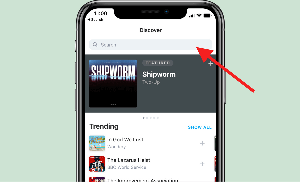
Just finished uploading our new podcast. Unfortunately, I lost the old feed, so you will need to update iTunes with this one.
Click here to listen.
I can’t believe that this video was not an ad for Southwest Airlines.
If it was, I think it’s brilliant (especially the last line: “you can not get that on United, lemme tell you that!”)
If it wasn’t, it’s a lucky bit of exposure.
Today, for those who don’t know it, is Good People Day. It was created last year by Gary Vaynerchuk as a way of giving some love to someone in your life who is kind of an “unsung hero.”
Today, I want to give a huge “good person” shout out for my sister, Sarah Jackson. Sarah is an incredibly gifted communicator: she is an amazing graphic designer, artist and storyteller. When we were kids, we would always compete in art class to see who could get the most “votes” at the end (from our classmates). I was a salesperson, so I could “sell” my art; but, when the teacher took away my ability to sell, she would always win based purely on artistic skill.
She has illustrated, written, and published a really cool line of children’s books called “A Jam Story” that have become favorite reading material for my kids (and many others).
She’s also a tenacious runner; in college she would take me out for runs. Again, being competitive I thought I would leave her in my dust. Nope. She killed me. She’s recently been running in half-marathons and doing very well.
Sarah’s character shines in her drawings, her stories, and her life. Get to know her by going to her site:www.ajamstory.com.